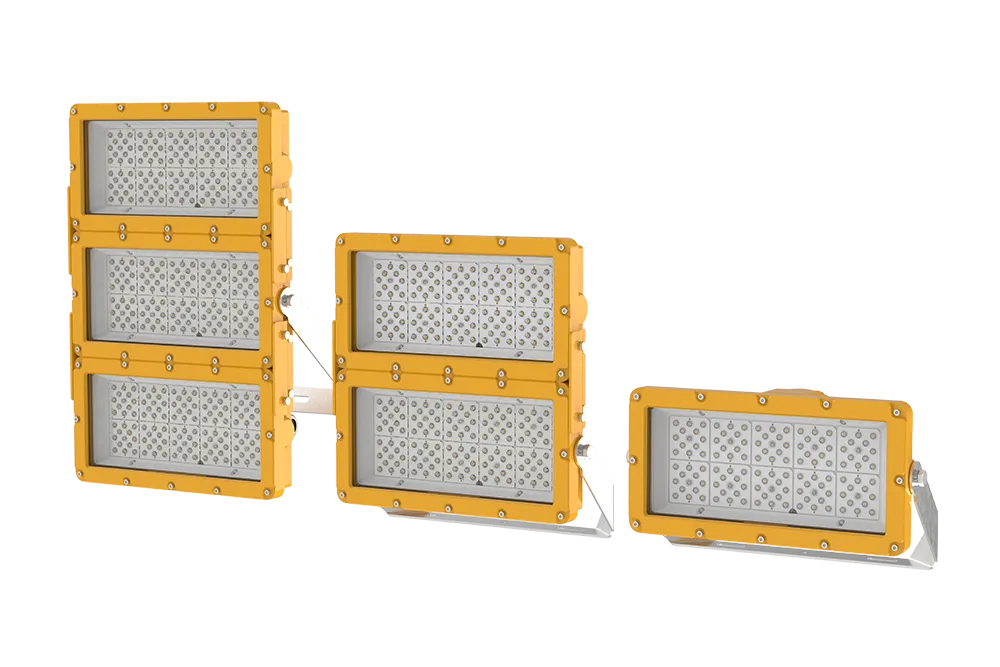
Beginning said text explores multiple devices concerning blast-proof lighting through manufacturing fields.
Running securely alongside risky spots namely petrochemical complexes demands designed hardware to minimize potential emergencies. Blast-resistant illumination systems are required constituents in these spaces, designed to survive sparks, explosive mists, and combustible locations. These tools are not originally risk-free; instead of that they are constructed to restrain any inward arc or flash and restrict it from igniting a extended eruption in the neighboring area. This summary furnishes fundamental details about explosion-proof fixtures, their utilizations, and mitigation aspects for setting up them accurately.
Interpreting Explosion Proof Lighting Standards
Navigating certain blast-proof lighting protocols can be elaborate, especially regarding industries handling hazardous settings. These standards – often referencing official bodies specifically the National Electrical System (NEC), ATEX (Europe), and IEC – specify stringent design and placement processes to lessen the hazard of burning from non-explosive machinery. Understanding prescribed standards is imperative for ensuring technician safety and meeting with binding commands.
Electroluminescent Explosion Proof Lighting Devices: Quality & Guarding
Crystal-Based hazloc lighting modules manifest a important augmentation over conventional gas-discharge units in locations where flammable gases are observed. These tough apparatus simply deliver noteworthy power savings, resulting in lessened maintenance charges, but significantly promote a higher rank of risk mitigation by reducing the chance of fire outbreaks owing to electric faults}.
Explosive Unsafe Environment Risky Proof Combustion Flare Flash Resistant} Lights : A In-depth Examination
Ex Unsafe Zone Dangerous Proof} Devices are uniquely designed lighting mechanisms built to work safely within conceivably ignitable environments. These sturdy fixtures avoid sparks, thermal flux and electric charges from starting a severe explosion. They habitually incorporate innovative designs, employing namely impermeable housings and essentially safe wireless units to confirm safety protocols in workplaces like crude & chemical gases processing, fabrication plants, resource recovery operations, and medication production.
Identifying the Right Ignition-Resistant Lighting for Risky Properties
Selecting the most fitting intrinsically safe luminaries for a selected danger zone involves thorough review. Variables such as the grouping (e.g., Rating I, II, or III and domains 1) have to be meticulously evaluated to confirm agreement with consistent security guidelines. Additionally the area's typical threats, factor in ecological conditions, like thermal state and water content, to pick a durable and secure remedy. Constantly collaborate with a expert expert to guide your selection process.
Sites Where Are Found Explosion Proof Lights?
Explosion-proof frequently referred to as intrinsically safe|hazardous location|Class-rated} illumination sources are unconditionally needed in any areas where flammable vapors or powders could conceivably create a explosive atmosphere. This commonly includes processing manufacturing plants, lacquer application areas, crop handling facilities, and sanitary treatment works. Regulations, such as those from NEC and ATEX, dictate their installation in these locations to deter the risk of sparks and maintain operational functionality.
Perks of Electroluminescent in Detonation Safe Fixtures
Transitioning to Light Emitting Diode technology for explosion proof sources offers a remarkable variety of gains. First, luminescent sources boast a significantly longer operating life compared to traditional incandescent emitters, reducing overhaul outlays and breaks. They are also intrinsically safer, producing less radiant heat which curtails the potential of sparking in treacherous atmospheres. Also, photon emitters are considerably efficient in energy use, leading to diminished electrical consumption costs and a narrowed natural mark. Finally, the durable architecture of Electroluminescent lighting systems withstanding the rigorous environments typical of flammability-rated areas.
- Enhanced Operating Life
- Curtailed Repair Costs
- Elevated Security
- Curtailed Electricity Expense
- Boosted Durability
Controlling and Examining Explosion Proof Lighting Systems
Consistent servicing and in-depth assessment of spark proof lighting networks are importantly vital for preserving risk prevention and curbing potential risks. This covers a scheduled review of all pieces, such as fixtures, ducts, wiring, and related distribution boxes. Notably, examine for corrosion, fabric deterioration, and secure bonding. What is more, guarantee that each signs are legible and that the light required by authorized codes.
- Carry out ocular reviews.
- Evaluate power connections.
- Corroborate intrinsically safe properties.
Upcoming Trends of Explosion Proof Lighting Technology
Progressing landscape of explosion-proof sources technology indicates a meaningful shift from traditional designs. Future systems will widely incorporate explosion proof led light fixtures smart capabilities, enabling virtual monitoring, diagnostics, and responsive control. We imagine a strengthening adoption of semiconductor technology, not only for its inherent energy efficiency, but also its ability to facilitate embedded sensors for identifying unsafe conditions. Also, materials analysis is promoting innovations in strong container materials, allowing for slimmer and enhanced designs, while sustaining the needed levels of hazard prevention.
- Augmented battery life for transportable applications.
- Blending with foreseeing maintenance structures.
- Design of maintenance-free lens systems.