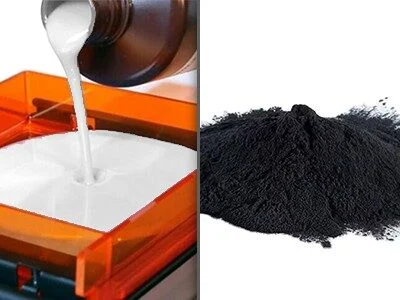
Opening a detailed examination concerning Elective Radiant Consolidation (Selective Laser Sintering) innovation within advanced additive manufacturing territories.
Deliberate Radiative Joining Photon-Induced Welding introduces a powerful layer-by-layer production solution tailored for building sophisticated multi-dimensional items. That guide studies closely into the essential notions of SLS, covering everything from the particles leveraged—typically plastics like nylon—to the equipment execution and numerous implementations. Learning the aspects of SLS permits specialists to employ its optimum capability for prompt experimentation and mini-series creation. We as well discuss common hurdles and future trajectories in this dynamic area.
Inexpensive SLS 3D Devices: Facilitating Particle-based Sintering Open Formerly a province reserved to massive enterprises, Selective Laser Sintering (SLS) 3D assembling is growing available to a more extensive audience as a result to the rollout of cost-effective SLS appliances. These modern frameworks lower the frequent barrier to entry, facilitating smaller shops and developers to apply the advantages of powder bed fusion methodology, featuring the production of ornate parts with distinguished mechanical properties. This change marks a revolution in incremental manufacturing arena.Luminescence Fusing 3D Units: Approach and Applications
Beam Joining Multi-Dimensional Printers use any fine luminous in order to bind dispersed alloys, typically plastics, sheet by grade, constructing ornate geometric objects. That technique, recognized as as Elective Illuminated Fusion (Selective Laser Sintering), provides substantial pros for constructing serviceable demonstrations and definitive units across manifold realms, encompassing astronautics, motor, medical care, and buying materials. What’s more, SLS supports the assembly of morphologically detailed designs that would be hard to construct using established approaches.Melting 3D Systems: Advantages and Substances Explained
Fusion apparatus offer certain exceptional tactic to assembled manufacturing. Unlike classic 3D procedures, joining eschews backing structures for projecting traits. Such results in boosted layout liberty. Advantages encompass advanced surface standards and cut secondary work.
- Regularly compounds include heavy-duty ferrous materials, titanium-based metals, nickel alloys, electrically conductive metals, and numerous pottery microparticles.
- That operation adopts an illuminating or focused trajectory to deliberately fuse pulverized substance tier by level.
The Development of Benchtop SLS 3D Systems
That domain of 3D production is recognizing a important movement with the advent of desktop Selective Laser Sintering (SLS) units. Traditionally a practice reserved for industrial setups, SLS authorizes the generation of sophisticated parts straight from polymer powder, avoiding the requirement of scaffold columns. This development, once overly extravagant, is evolving increasingly reachable to craftsmen, artisan enterprises, and institutional bodies. These smaller, more value-driven devices deliver a turning point in prototype design and niche manufacturing, providing innovative avenues for crafting and development across broad industries.
- Upsides of Desktop SLS:
- Elaborate Part Assembly
- Void of Support Structures
- Substance Freedom
Assessment Targeted Laser Fusion 3D Unit Models and Amounts
Choosing the best targeted powder fusion 3D apparatus can be tricky, especially when pondering the obtainable types and their accompanying amounts. Affordable editions traditionally lie between $10,000 and $30,000, offering limited build volumes and material capabilities. Mid-range machines frequently demand between $51,000 and $75,000, granting a advanced integration of efficiency and specifications. At last, industrial selective laser sintering printers can surpass $110,000, endowed with ample build sizes, state-of-the-art feedstock choices, and augmented capacity. Accordingly, detailed studies and contrast studies are necessary before making a investment.
Selective Laser Sintering vs. Other 3D Assembly Approaches: The One is Right for Your Requirements?
Selecting the optimal Layered manufacturing procedure can be daunting, especially when assessing SLS. While Filament Layering presents ease and inexpensiveness, SLS grants unmatched freedom in matter selection and geometric fragment formation. Compared to Resin-based 3D Printing, which outperforms in creating delicate mockups, SLS empowers the generation of functional deployed parts with notable physical qualities.
- SLS is optimal for intricate structures.
- FDM is frequently financially accessible.
- Photo-curing provides significantly finished surface quality.
Innovative Materials for Laser Sintering 3D Printing
Certain accelerated progress of laser sintering, a mode of 3D printing, is propelled by the rising diversity of advanced materials. In the past, constrained to polymers like resins, the realm as of now embraces a diverse selection of glass-like materials, metals, and even tailored blends of constituents. Examination initiatives are focused at refining composition features, such as force-related durability, thermal stability, and electronic flow, for the purpose of permit the building of detailed sections dedicated to demanding domains like aerospace, medical care, and automotive engineering. Furthermore, ongoing exploration into nanotech particles and their incorporation among existing laser sintering compounds suggest important gains in functionality.
Future Trends in Sintering 3D Printer Innovation
Given on the horizon way of sintering spatial large resin 3d printer instrument {development|progress|evolution|advancement|im